
Work to Be Done

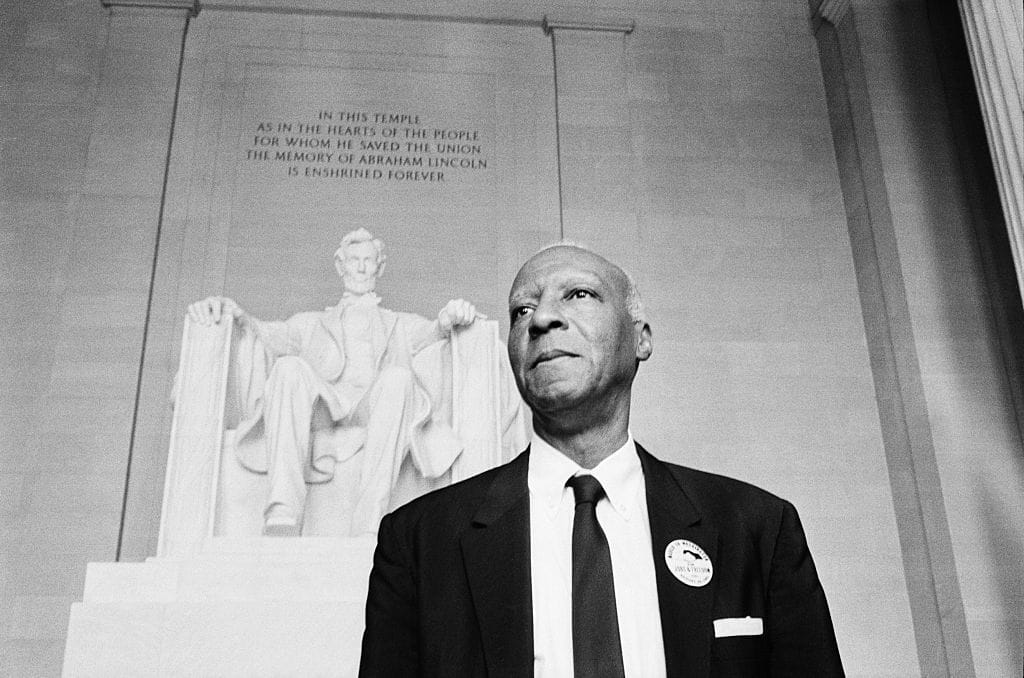
Today we celebrate the third principle of Kwanzaa, UJIMA, which in Swahili means "collective work and responsibility." This means, among other things, that the struggle for freedom requires all of us, and that we all have a role to play in our collective liberation. The ancestors have said so.
Anna Julia Cooper (1892)
"We take our stand on the solidarity of humanity, the oneness of life, and the indivisibility of forces... it is not the intelligent few, but the masses, who are the source of power. We must work together, not for the sake of one group, but for the elevation of the whole." Source: A Voice from the South (1892).
Hubert Harrison (1917)
"The only way to achieve our goals is through organized, collective effort. We must learn to pull together, to share the burden of our struggle, and to be responsible to one another in every action we take for the community's advancement." Source: The Voice (1917).
A. Philip Randolph (1942)
"Salvation for a race, nation, or class must come from within. Freedom is never granted; it is won. Justice is never given; it is exacted. And this victory requires the disciplined, collective responsibility of every individual working toward a common purpose." Source: Address to the March on Washington Movement (1942).
Claudia Jones (1949)
"The struggle for peace and freedom is not a private matter. It is a collective responsibility that requires the active participation of every member of the community, working in harmony to dismantle the structures of oppression." Source: "An End to the Neglect of the Problems of the Negro Woman!" (1949).
Frantz Fanon (1961)
"To educate the masses politically does not mean, cannot mean, making a political speech. It means trying, relentlessly and passionately, to teach the masses that everything depends on them; that if we stagnate it is their responsibility, and that if we go forward it is due to them too." Source: The Wretched of the Earth (1961).
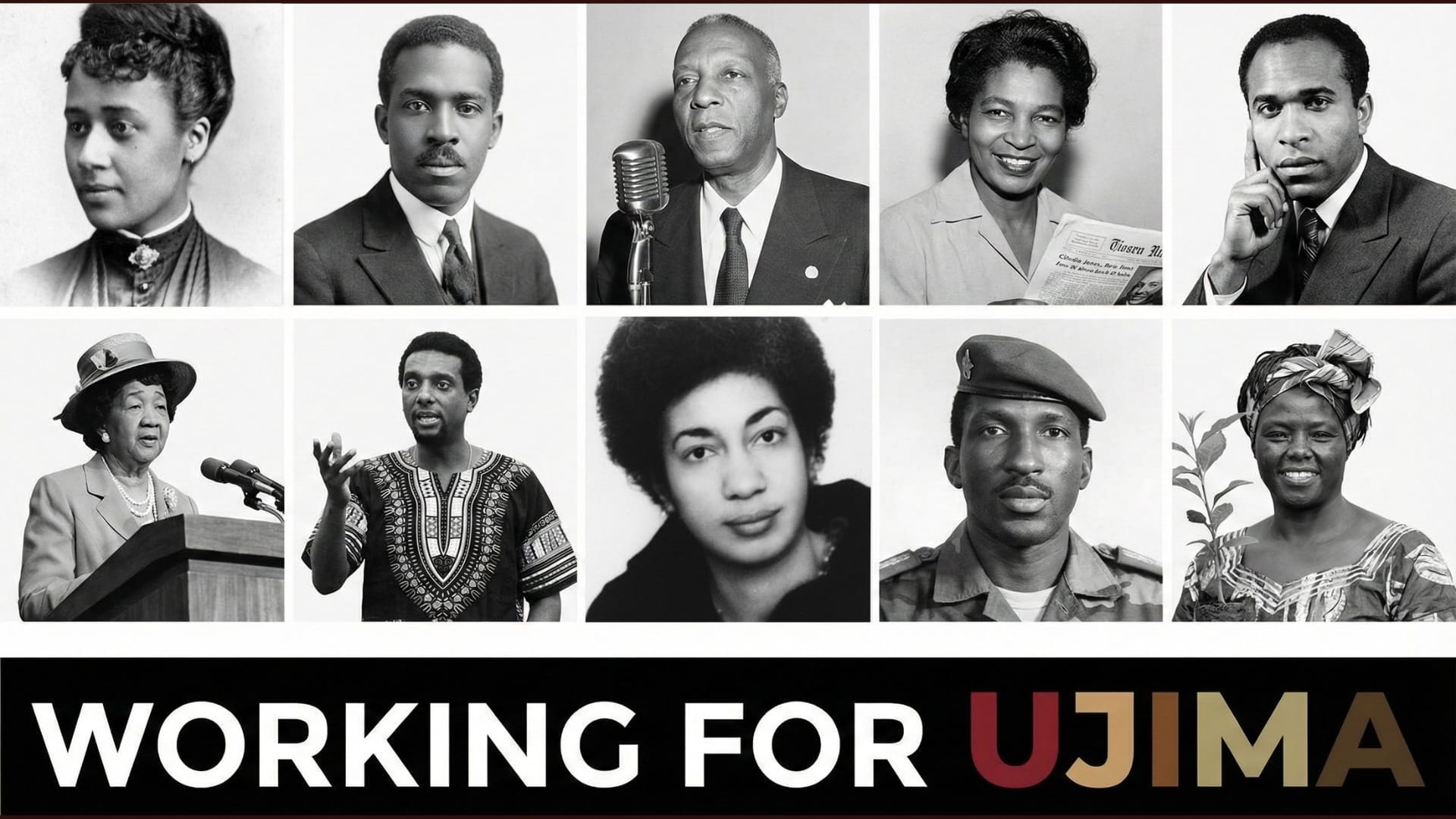
Dorothy Height (1963)
"We have to improve life, not just for those who have the most, but for those who have the least. This is our collective work. We must be responsible for the welfare of our neighbor as if it were our own, for in truth, it is." Source: Remarks at the March on Washington for Jobs and Freedom (1963).
Stokely Carmichael | Kwame Ture (1967)
"We must organize ourselves to speak for ourselves and work for ourselves. We must build our own institutions to provide for our own needs. This is the essence of collective responsibility—taking charge of our own lives and our own community." Source: Black Power: The Politics of Liberation (1967).
June Jordan (1978)
"We are the ones we have been waiting for. Our survival and our progress depend entirely on our ability to work together, to support one another, and to hold ourselves accountable to the collective vision of a just society." Source: "Poem for South African Women" (1978).
Thomas Sankara (1985)
"Our revolution is not a solitary endeavor. It is the work of the masses, working together to transform our reality. We must share the labor, share the sacrifices, and share the responsibility for the future we are building." Source: Speech on the Second Anniversary of the Revolution (August 4, 1985).
Wangari Maathai (2004)
"It's the little things citizens do. That's what will make the difference. My little thing is planting trees. What is yours? When we each take responsibility for our piece of the work, the collective result is a transformed world." Source: Nobel Peace Prize Lecture (2004).