The Giants Speak of Unity


On this first day of Kwanzaa (UMOJA), let us hear from some of the ancestors who spoke quite passionately about Pan-African unity. One love, fam!
Frederick Douglass (1848)
"We are one, our cause is one, and we must help each other; if we would succeed. We should breed no distemper among ourselves, but seek the good of all. We are all of the same lineage—we are of the same complexion—we are all subject to the same variety of wrongs and outrages—we are all struggling for the same great objects—and we should all be united in the same grand effort for their attainment." Source: "Address to the Colored People of the United States," published in The North Star (September 29, 1848). Learn More: Library of Congress - Frederick Douglass Newspapers
W.E.B. Du Bois (1897)
"For the development of Negro genius, of Negro literature and art, of Negro spirit, only Negroes bound and welded together, Negroes inspired by one vast ideal, can work out in its fullness the great message we have for humanity. We must strive by race organization, by race solidarity, by race unity to the realization of that broader humanity which freely recognizes differences in men, but sternly deprecates inequality in their opportunities of development." Source: "The Conservation of Races," American Negro Academy (1897). Learn More: Project Gutenberg - W.E.B. Du Bois
Marcus Garvey (1922)
"The greatest weapon used against the Negro is disorganization. It is because of the Negro's lack of organization that he has been in a position of difficulty for hundreds of years. The world is organized and if the Negro is to take his place in this world, he must be organized. If we do not organize, we shall continue to be the footstool of other races and of other nations. Up, you mighty race, accomplish what you will!" Source: "The Principles of the Universal Negro Improvement Association" (1922). Learn More: Marcus Garvey Papers
Mary McLeod Bethune (1955)
"I leave you a thirst for education. Knowledge is the prime need of the hour. I leave you a dread of any person who may endanger your liberty. I leave you finally a responsibility to our young people. The world around us really belongs to youth, for youth will take over its future management. Our children must never lose their zeal for building a better world. But most of all, I leave you love. I leave you hope. I leave you the challenge of developing a confidence in one another. We must learn to live together in a unity that is not just a word, but a way of life." Source: "My Last Will and Testament," published in Ebony Magazine (August 1955). Learn More: National Archives - Mary McLeod Bethune Council House
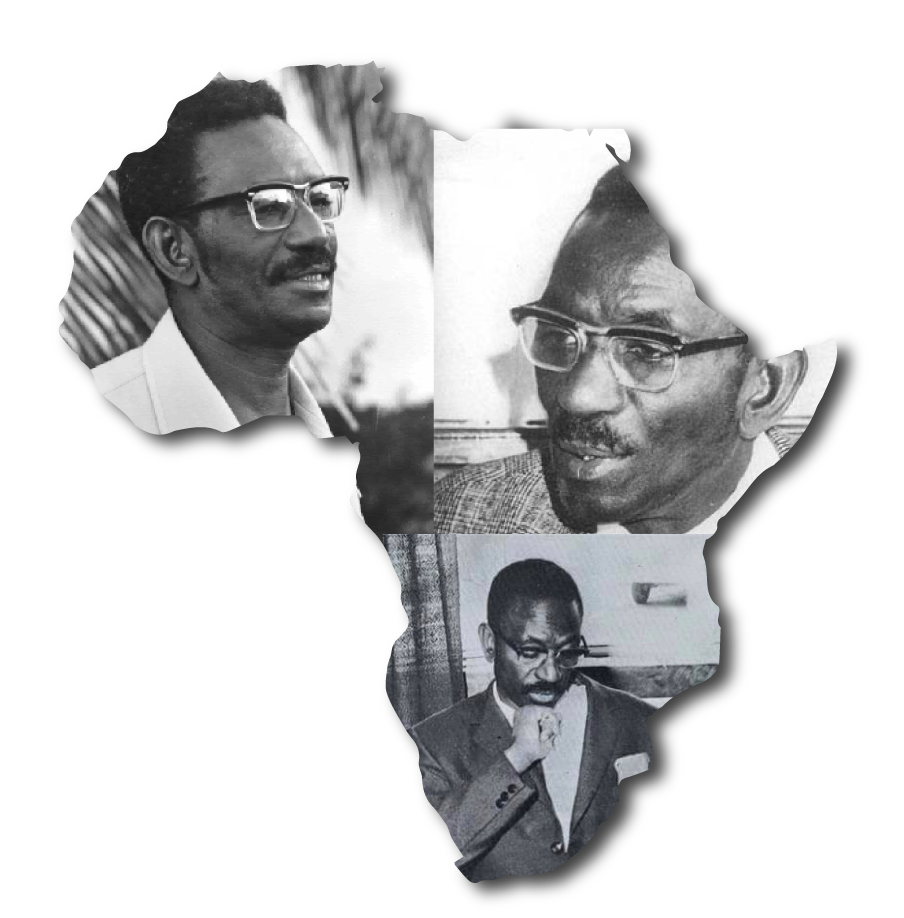
Cheikh Anta Diop (1960)
"The restoration of the collective memory of African peoples is a prerequisite for the reconstruction of African unity. We must rediscover our history, our culture, and our identity. Only then can we build a future that is truly our own. African unity is not merely a political slogan; it is a historical necessity rooted in our shared past and our common destiny." Source: "Black Africa: The Economic and Cultural Basis for a Federated State" (1960). Learn More: UNESCO General History of Africa Project
Patrice Lumumba (1960)
"This conference, which brings together the leaders of all the African countries, is the best proof of the fact that we are all brothers and that we are all united in the same struggle. Our solidarity will have meaning only when it is boundless and when we are convinced that Africa's destiny is indivisible. These divisions, which the colonial powers have always exploited the better to dominate us, have played an important role—and are still playing that role—in the suicide of Africa." Source: Speech at the Opening of the All-African Conference in Leopoldville (1960). Learn More: Lumumba Foundation
Fannie Lou Hamer (1963)
"The only way we can be free is to unite. We have to stand together because what happens to one of us, happens to all of us. Whether you're in the North or the South, whether you're in the city or the country, if you're Black, you're in this struggle together. We are not fighting for ourselves alone, but for our children and for the generations to come. We must be the ones to bring about the change we want to see." Source: Testimony and Speeches regarding the Mississippi Voter Registration (1963). Learn More: SNCC Digital Gateway - Fannie Lou Hamer
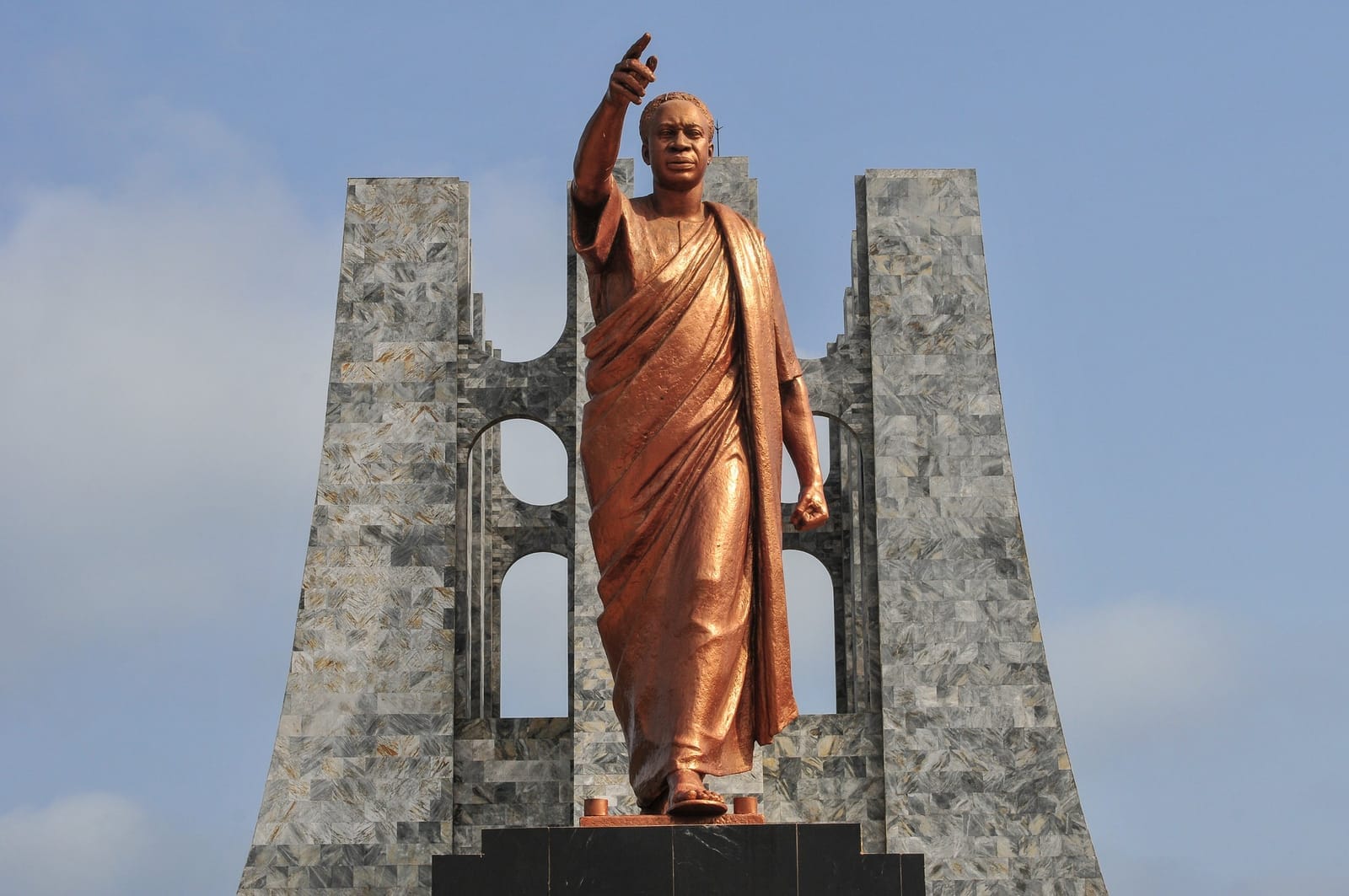
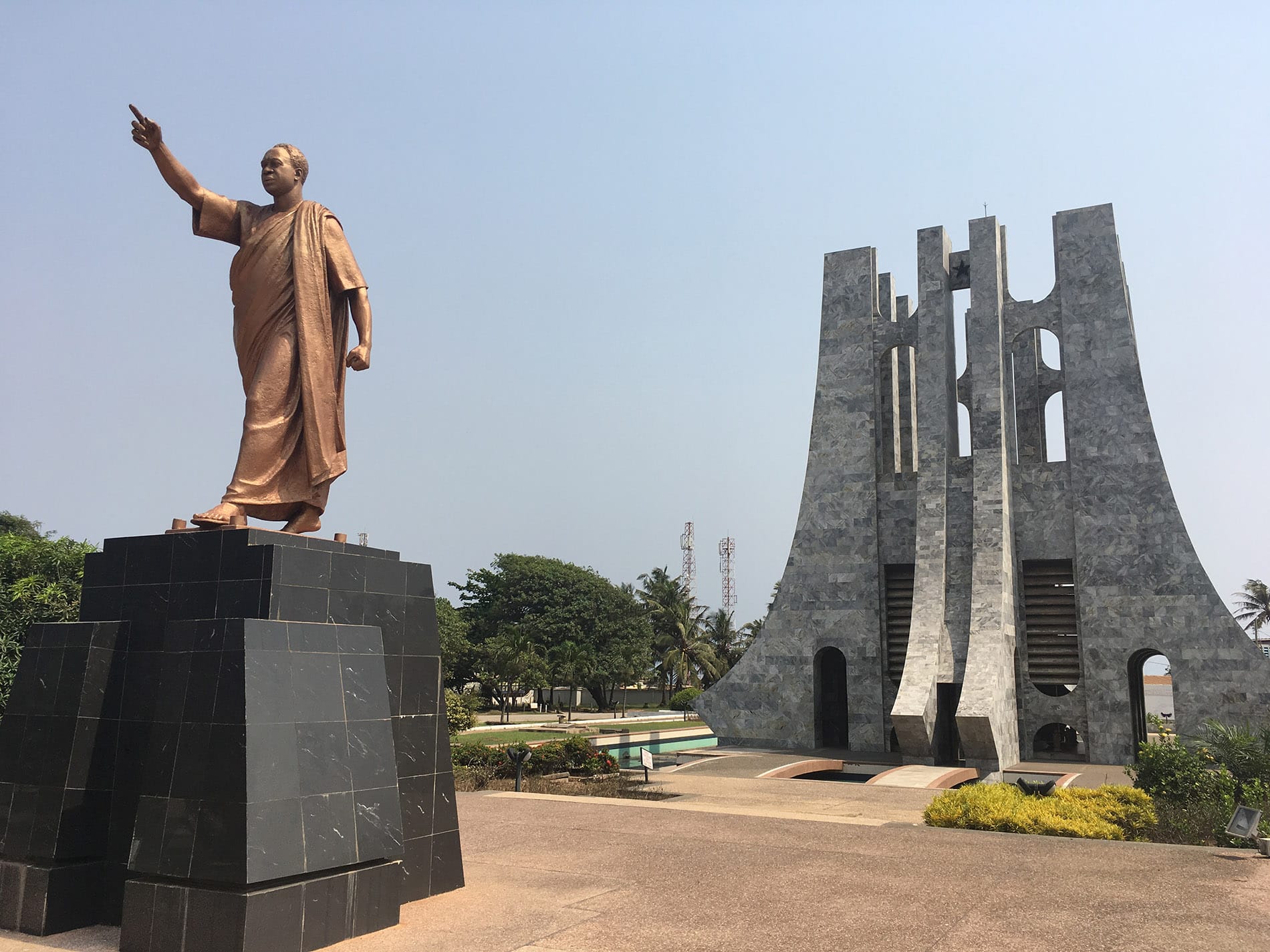
Kwame Nkrumah (1963)
"We must unite now or perish. We must recognise that our economic independence resides in our African union and requires the same concentration upon the political achievement. The unity of our continent, no less than our separate independence, will be delayed if, indeed, we do not lose it altogether, until we form a wide, common market of a single African nation. We have already reached the stage where we must combine, or fall. I am not African because I was born in Africa but because Africa was born in me." Source: Address to the Founding Meeting of the OAU (1963).Learn More: Google Arts & Culture
Haile Selassie (1963)
"History teaches us that unity is strength, and cautions us to submerge and overcome our differences in the quest for common goals, to strive, with all our combined strength, for the path to true African brotherhood and unity. Our liberty is meaningless unless all Africans are free. Our brothers in the Rhodesias, in Mozambique, in Angola, in South Africa, cry out in anguish for our support and assistance. We must urgently identify ourselves with them." Source:"Towards African Unity" Speech, Addis Ababa (1963). Learn More: BlackPast.org - Haile Selassie Speeches
Julius Nyerere (1963)
"African nationalism is meaningless, dangerous, and anachronistic, if it is not, at the same time, Pan-Africanism. For no one of our nations is large enough to survive as a modern state. We are too small to be able to defend our own interests; we are too small to be able to develop our own economies. Our only hope is in unity. We must submerge our differences in the greater interest of the African people." Source: Speech on African Unity and the OAU (1963). Learn More: African Studies Centre
Malcolm X (1964)
"We are resolved to reinforce the common bond of purpose between our people by submerging all of our differences and establishing a nonsectarian, constructive program for human rights. We have formed the Organization of Afro-American Unity to fight for the rights of our people to be respected as human beings, and to be given the rights of human beings in this society, on this earth, in this day, which we intend to bring into existence by any means necessary." Source: Statement of Basic Aims and Objectives of the OAAU (1964).
Ella Baker (1964)
"We who believe in freedom cannot rest until it comes. But we cannot do it alone. The only way we can win is through a group effort, by bringing together the people who have been pushed aside and forgotten. Our strength lies in our ability to organize ourselves at the bottom, and to move upward in a united front. We must learn to trust each other, to work with each other, and to realize that our struggle is a collective one. Until the killing of black men, black mothers' sons, becomes as important to the rest of the country as the killing of a white mother's son, we who believe in freedom cannot rest." Source: Address at the Hattiesburg Freedom Day (January 21, 1964). Learn More: Ella Baker Center for Human Rights
Amílcar Cabral (1966)
"We are for African unity, on a regional or continental scale, inasfar as it is necessary for the progress of the African peoples, and in order to guarantee their security and the continuity of this progress. But our struggle is not only against colonialism; it is a struggle for the complete liberation of our people and the building of a new society where there is no exploitation of man by man." Source: "The Weapon of Theory," Tricontinental Conference in Havana (1966).Learn More: Marxists Internet Archive - Cabral Archive
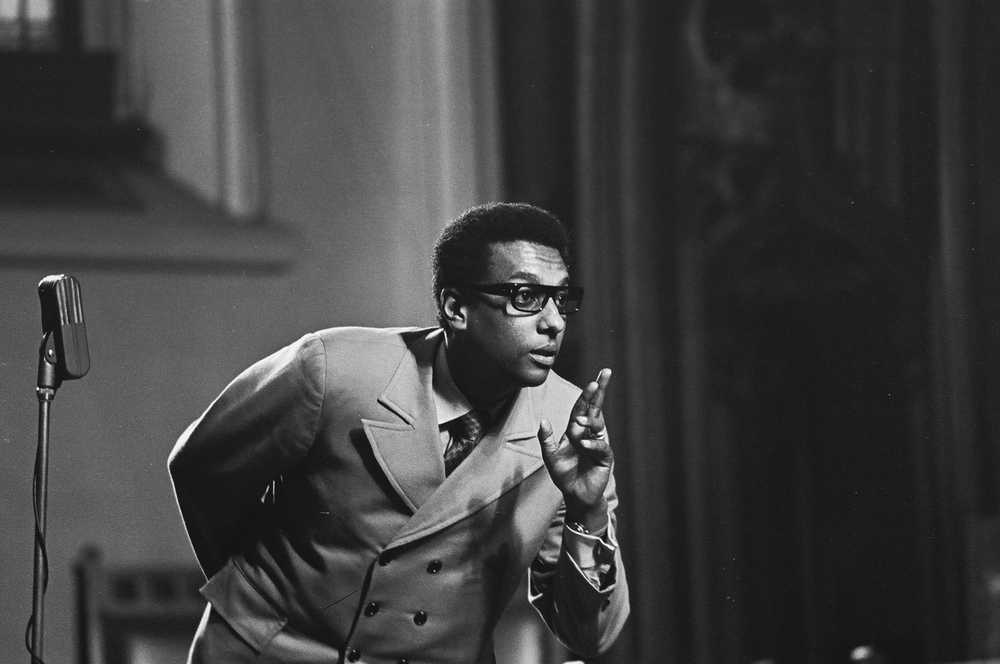
Stokely Carmichael | Kwame Ture (1966)
"It is a call for black people in this country to unite, to recognize their heritage, to build a sense of community. It is a call for black people to define their own goals, to lead their own organizations. We are a people who have been oppressed because we were black. We must now use our blackness as the basis for our unity. We want to be able to determine our own destiny and we want to be able to build a community where we can live together as human beings." Source: "Black Power" Speech at UC Berkeley (1966). Learn More: American Rhetoric - Stokely Carmichael
Huey P. Newton (1967)
"The Black Panther Party for Self-Defense teaches that in the final analysis the only way to be free is to possess the power to define our own destiny and to have the means to protect that destiny. We recognize that the struggle of the black people in America is a part of the struggle of oppressed people all over the world. Our unity must be based on a common understanding of our oppression and a common commitment to the total liberation of our people by any means necessary." Source: "The Correct Handling of a Revolution," The Black Panther Newspaper (1967). Learn More: The Dr. Huey P. Newton Foundation
Martin Luther King Jr. (1967)
"We have inherited a large house, a great ‘world house’ in which we have to live together—black and white, Easterner and Westerner, Gentile and Jew, Catholic and Protestant, Moslem and Hindu—a family unduly separated in ideas, culture and interest, who, because we can never again live apart, must learn somehow to live with each other in peace. All inhabitants of the globe are now neighbors. This world-wide neighborhood has been brought into being as a result of the modern scientific and technological revolutions." Source: Where Do We Go from Here: Chaos or Community? (1967). Learn More: The King Center
Steve Biko (1971)
"The first step is to make the black man come to himself; to pump back life into his empty shell; to infuse him with pride and dignity, to remind him of his complicity in the crime of allowing himself to be misused and therefore letting evil reign supreme in the country of his birth. This is what we mean by Black Consciousness. It is a unity of the mind and the spirit, a realization that we are our own liberators." Source: "White Racism and Black Consciousness," SASO Seminar (1971). Learn More.
Thomas Sankara (1984)
"I speak on behalf of those who are looking for a way out and who are looking for a way to live. I speak on behalf of those who have been forgotten. For us, the struggle for unity is not just a dream, it is a necessity for survival. Better one step forward with the people than ten steps without them. We must learn to live African, to eat African, to dress African, and to produce African." Source: Address to the 39th Session of the UN General Assembly (1984). Learn More.
Angela Davis (2014)
"Whenever you conceptualize social justice struggles, you will always defeat your own purposes if you cannot imagine the people around whom you are struggling as equal partners. We have to learn how to think and act and struggle for a better world in terms of the community of all that is alive. Our struggles for freedom must be expansive, embracing all who are oppressed, for our liberation is inextricably bound up with the liberation of every human being on this planet." Source: Freedom is a Constant Struggle (2014). Learn More: Angela Davis Papers at Harvard Radcliffe Institute
Paul Kagame (2014)
"Unity is the choice we make to see ourselves as one people, regardless of the artificial divisions imposed upon us by others. It is the foundation of our progress and the shield of our dignity. We cannot wait for others to define our future; we must be the architects of our own destiny. Our strength lies in our ability to stand together, to work together, and to build a prosperous Africa for all its children." Source: Speech at the 20th Anniversary of the Genocide Against the Tutsi (2014). Learn More: Official Website of the President of the Republic of Rwanda
 B. Francis Clark